






Nebraska Livestock Sale Barns: Strengthening Rural Communities
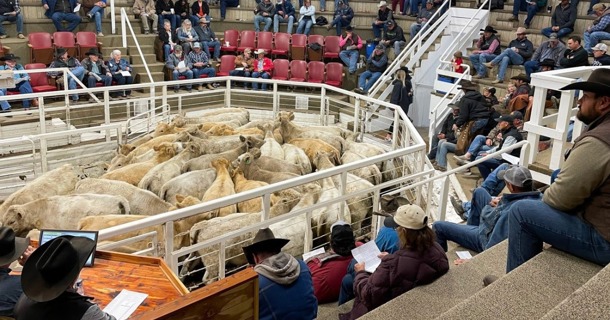
Lincoln, Neb., Jan. 26 — Social relationships build a sense of community and belonging. For farming and ranching, one of those communities is the livestock sale barns. Researchers at the University of Nebraska–Lincoln examined four Nebraska livestock sale barns to assess the social value these businesses provide to their patrons and surrounding communities. The study explored how social connections formed at sale barns contribute to personal well-being and facilitate the exchange of knowledge that influences farmers and ranchers both within the sale barn environment and beyond.
“Our research team surveyed social interaction between patrons, managers, and their employees at the sale arena, cafes, and open gathering spots,” said Cheryl Burkhart-Kriesel, Nebraska Extension Specialist with the Department of Agricultural Economics. “Following, we conducted more in-depth interviews with some of the individuals who completed the survey.”
Besides the buying and selling of livestock, 60 percent of the study participants said socializing, such as building relationships and offering support to others, was a reason they attended livestock auctions. Additionally, 63 percent said they have made new friends as a result.
These connections provide an outlet for individuals to cope with industry challenges, and range from a simple recognition of hard work and livestock quality to more in-depth, one-on-one conversations about personal life events.
Michelle Krehbiel, professor and Extension specialist for 4-H youth development, acknowledged the importance of these connections to good mental health.
“These social connections and relationships are vital for helping farmers and ranchers ease the isolation and loneliness that often come with the job,” she said.
A place where people gather to share their commonality, the sale barn community builds knowledge and mentoring, which is passed down through generations. Study participants reported learning about herd management practices, market trends, and how to manage the impacts of weather and drought. Sale barn relationships also provide support when a farmer or rancher is dealing with a crisis, such as fire, family illness, or death.
“It’s kind of like the beauty salon of the cowboy world,” said one participant.
The sale barn also allows a diverse group of people in the livestock industry to interact, build business networks, and create new business opportunities. Finally, there are spillover effects on the community. Producers often purchase supplies at the local farm store or visit other businesses while in town. This impacts the community's economic viability and builds social connections between the town and the surrounding farms and ranches.
“A producer who was surveyed told me that the local farm store doubles their sales the day cattle are sold at the sale barn,” said Randy Saner, Nebraska Extension Livestock Educator.
“We are very appreciative of the sale barn owners who opened their doors to allow us to research their patrons and discover the unique culture of each location,” said Marilyn Schlake, Extension educator emerita with the Department of Agricultural Economics.
Although livestock sale barns are private businesses that serve as marketplaces for livestock, researchers found that each sale barn has a culture defined by its history, patrons, and established social norms. As economic and community developers consider their economic strengths, these meeting places, also known as “third places,” are vital to building social anchors within a community. They build environments where people can engage in civic and community social life.